Dressing for three hours on a frozen Levi lake
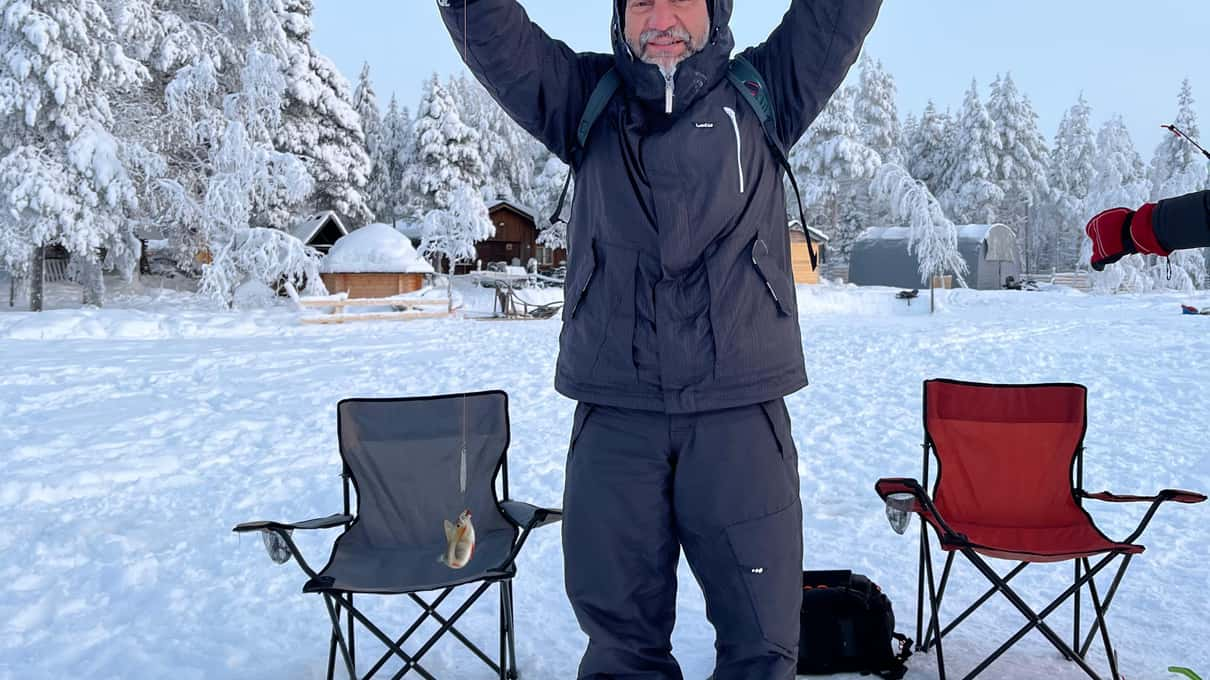
Ice fishing is a still sport, and that is what makes it cold. You sit or stand over a hole for hours on open ice, with nothing to block the wind. Several tours lend an overall and boots, yet what you wear under them decides whether you enjoy the trip or count the minutes.
How cold a lake near Levi gets
On a winter day in Levi the thermometer usually reads somewhere from −10 to −25 °C (14 to −13 °F), and a cold snap pushes it lower. Levi sits in the municipality of Kittilä, with the Arctic Circle about 170 km (105 miles) to the south.
The lake feels colder than the village streets. Out on open ice there are no buildings or trees to break the wind, and you spend most of the trip on a stool or standing over a hole without moving much.
That stillness is what catches people out. A skier warms up on every run, but an angler watching a short rod makes almost no heat of their own, so you need more layers than for a day on the slopes.
Good clothing will not bring a bite, since no tour can promise a catch. It does let you wait long enough to give the fish a fair chance, and our guide to what lives under the ice explains why patience matters.
What the operators lend you
Most of the trips hand out a warm outer layer, which takes the bulkiest items out of your suitcase. The lists differ from tour to tour, so read the one you book before you pack.
- Safartica's ice fishing trip by car (~$122) lends the fullest kit of the five. Thermal overalls and winter boots come with wool socks and gloves plus a beanie and a wool scarf
- Arctic Circle Snowmobile Park's snowmobile trip (~$190) hands out an overall with boots and gloves and adds a helmet and a balaclava for the ride
- Safartica's five-hour snowmobile safari (~$234) includes winter clothing
- Keo Wilderness's salmon soup trip (~$99) has thermal clothing on its Viator list
- Beyond Arctic's lake trip (~$117) mentions no clothing, so check with the operator first or arrive fully dressed
Our price comparison of the five tours puts clothing in a column next to the price, which helps when two trips cost about the same. A borrowed overall goes over your own layers, so what you wear underneath still decides how warm you stay.
Layers under the overall
Start with a thin base layer of merino wool or a synthetic fabric on both your top half and your legs. Wool keeps some warmth even when you sweat on the walk from the car or the sled to the fishing spot.
Over it goes a fleece or a light down jacket. Your legs need warm trousers or a second pair of long johns. Two thinner layers trap more warm air than one thick sweater, and you can peel one off by the fire.
Leave cotton in the suitcase, from jeans to T-shirts. Cotton holds sweat against the skin and turns cold within minutes once you stop moving on the ice.
If your tour lends no clothing, add a windproof winter jacket and insulated snow trousers on top. A ski outfit works well, as long as there is room for the fleece underneath.
From fingertips to face
Fingers suffer first because you handle bait and a wet line. Bring thin liner gloves for the fiddly moments and wear thick mittens or gloves over them the rest of the time.
A spare pair of gloves in a pocket earns its place. Gloves get damp from the hole and the snow, and a dry pair halfway through the trip feels better than any hot drink.
Your feet stand on ice for hours, so thick wool socks matter more than the brand of boot. Choose boots roomy enough for those socks, since a tight boot squeezes the blood flow and your toes cool faster.
Cover your face when the wind picks up. A wool scarf or a neck gaiter, plus a beanie pulled over the ears, protects the skin that frostbite reaches first, and our guide to the coldest fishing days lists the warning signs.
Rather have the whole outfit handed to you?
Safartica's trip by car lends everything from thermal overalls to wool socks, then drives you to a forest lake in a warm car.
Small things for your pockets
Disposable hand warmers weigh almost nothing and help a lot. Slip one into each glove or boot before you leave the car, since they take a few minutes to heat up.
Phone batteries drain fast in the cold and can shut off without warning. Keep the phone in an inside pocket close to your body, take it out for the photo, and put it back straight away.
On bright days later in the winter, sunglasses belong in the bag. Snow and ice reflect a lot of light once the sun climbs higher, and our guide to the best time to book explains when those long bright days begin.
If you plan to drive the sled on the snowmobile safari, bring your driver's licence. Safartica asks for one from the driver, and two people share each machine and take turns.
Dressing for the snowmobile ride
The two snowmobile trips add a cold that the car trips do not have. Riding into the wind chills exposed skin quickly, even on a calm day. Wear a scarf or balaclava under the helmet.
Arctic Circle Snowmobile Park hands out a helmet and a balaclava, and Safartica includes winter clothing on its safari. Ski goggles help if you own them, since cold air makes eyes water on a long ride.
Our comparison of snowmobile and minivan trips covers the ride itself, including who may take the handlebars and how the sleds are shared.
What to leave at the hotel
Big camera bags and a full backpack only get in the way. You spend the trip on the ice with gloved hands. A small bag or a few deep, zipped pockets carry everything you need.
Packed food is rarely needed, since every tour serves at least hot drinks and some serve a full meal. Our guide to eating on the ice shows what each trip cooks or pours.
Children need the same layers in smaller sizes, plus extra spares. The family guide covers which tours suit younger anglers and how to keep a cold child cheerful.